Antioxidant Organ Keeper for Transplant Organ Transportation
The Limited Viability of Transplant Organs and the Current State of Organ Transportation
There is a severe shortage of donor organs for transplantation in Japan. With the exception of kidneys, donor organs are generally limited to brain-dead donors with adequate circulation. In addition, transplantation requires viable, fresh organs; organs that have been preserved for extended periods cannot currently be used for transplantation.
The shorter the time between the cessation of blood flow and transplantation, the better. However, organs cannot remain viable for an extended period of time after blood circulation has stopped.
The table shown on the left indicates the total ischemic time for transplant organs—the approximate equivalent of a “shelf life” for an organ.
Even when a suitable donor organ is identified, the following steps must all be completed within this very limited period:
Organ retrieval → Preparation for transportation → Transportation → Completion of transplantation
If we assume that approximately three hours are required to allow sufficient time for transportation preparation and preparation before transplantation, the maximum available transportation time is the total ischemic time shown in the table minus three hours.
For a heart, this leaves only approximately one hour for transportation.
For this reason, even a five-minute extension of total ischemic time achieved through improved organ preservation technology could be highly significant.
If total ischemic time could be extended even slightly, the geographical area in which suitable donor organs could be sought could be expanded. More time could also be allocated to the surgical procedure. We believe that even a modest extension of organ viability could potentially contribute to increasing the number of transplant procedures and improving transplantation outcomes.
The Current Transportation System in Japan
As a general rule, transplant organs in Japan are transported using emergency vehicles operated by the Japan Organ Transplant Network, or by scheduled public transportation such as trains and Shinkansen bullet trains.
When these transportation methods cannot meet the required time limit, charter aircraft operated by private airlines may be used. The cost is approximately JPY 1–3 million per flight.
Therefore, the following technological developments are particularly important:
-
Development of methods and preservation solutions that can keep donor organs viable and in good condition for as long as possible.
-
Development of cryopreservation technologies that can eventually preserve organs without causing significant cellular damage.
Organ Transportation Containers
 One of the important factors contributing to organ deterioration is cellular damage caused by reactive oxygen species (ROS), which is also associated with oxidative processes in living organisms.
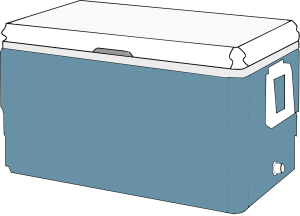
Currently, after an organ is retrieved, it is immersed in a specialized organ preservation solution* and cooled to approximately 4°C using ice. The organ is then transported in a conventional cooler.
Naturally, temperature variations can occur depending on where the organ is positioned inside the cooler. In addition, direct contact with ice must be carefully avoided, as excessive localized cooling can cause tissue damage and necrosis.
At a time when advanced technologies are being introduced into many areas of medicine, we believe that organ transportation and preservation containers represent an area with considerable potential for further technological development.
Oxidative Damage During and After Transportation
After transportation, the organ is removed from the cooler and taken out of the preservation solution before transplantation.
During this process, exposure to air and changes in temperature may promote oxidative processes involving reactive oxygen species, potentially accelerating cellular damage and reducing organ viability.
A similar concept can be observed in food products such as wine, fruit, meat, and tuna.
In meat and tuna, for example, oxidation and temperature changes can cause cellular damage, resulting in the release of intracellular water and the formation of drip. In living organisms, oxidative damage can impair normal cellular functions and contribute to the accumulation of cellular waste and other processes associated with aging.
In all of these cases, oxidation plays an important role.
Whether it is wine, food, living tissue, or even iron, oxidation must be carefully controlled.
Development of an Organ Preservation & Transportation Case
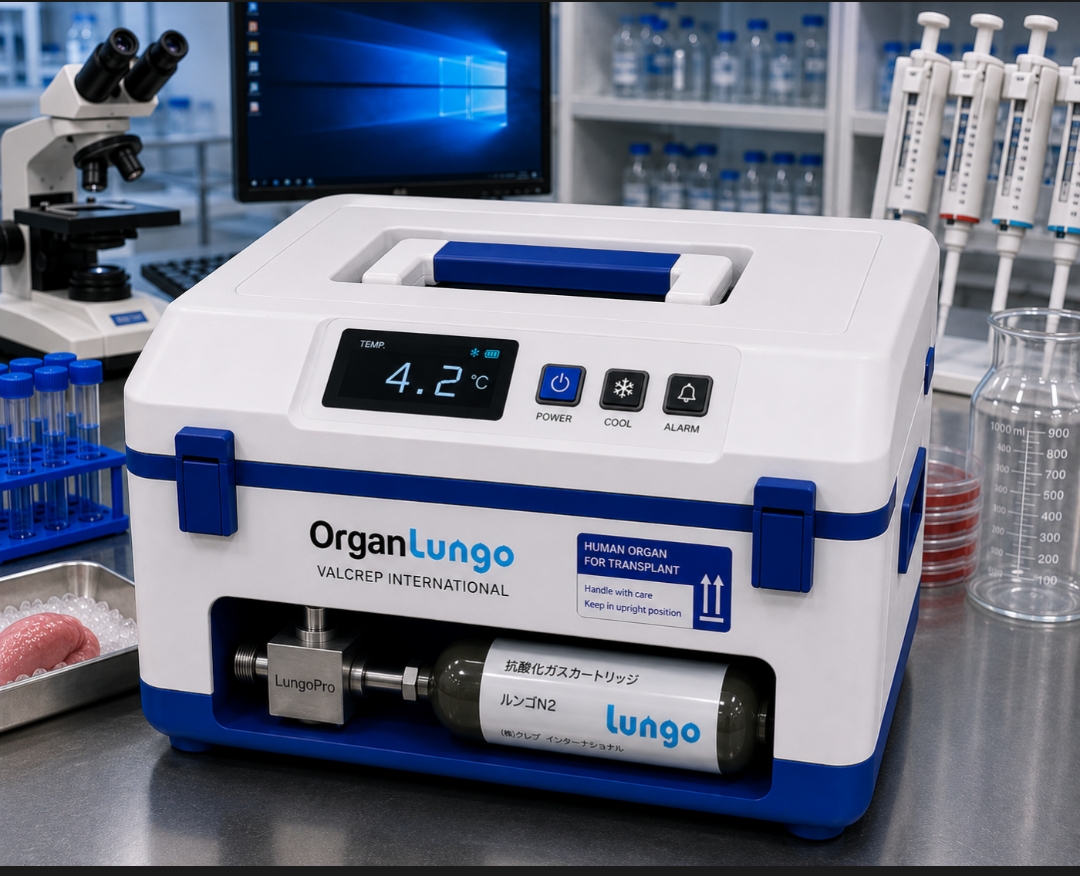 We are developing an organ transportation case designed to replace the air inside the container with high-purity nitrogen gas.
By reducing the concentration of oxygen surrounding the organ, the system is intended to suppress oxidation and help maintain the organ in a viable condition for as long as possible.
We believe that future technological advances may make it possible to combine oxidation-control technology with rapid freezing and thawing technologies designed to minimize cellular damage.
Ultimately, the combination of these technologies could make long-term organ preservation possible and may one day enable preserved organs to be used for transplantation.
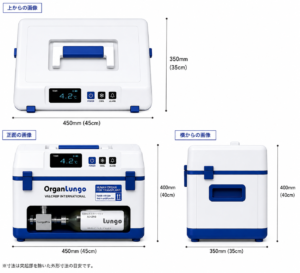
The image above is a conceptual representation of the device currently under development.
*Organ Preservation Solutions
Several organ preservation solutions are currently available. Among them, UW (University of Wisconsin) solution, developed in the 1970s, remains one of the standard solutions used for organ preservation today.
UW solution is an intracellular-type, calcium (Ca²⁺)-free preservation solution.
Hydroxyethyl starch (HES) and lactobionic acid are used for osmotic regulation. Adenosine serves as an anti-inflammatory agent, a vasodilator, and a precursor for ATP. Allopurinol and glutathione are included for antioxidant protection, while phosphate buffer provides buffering capacity.
Example: Belzer UW® Cold Storage Solution
| Ingredient | g/L | mmol/L |
|---|---|---|
| Hydroxyethyl starch | 50.0 | N/A |
| Lactobionic acid | 35.83 | 105 |
| Potassium dihydrogen phosphate | 3.4 | 25 |
| Magnesium sulfate heptahydrate | 1.23 | 5 |
| Raffinose pentahydrate | 17.83 | 30 |
| Adenosine | 1.34 | 5 |
| Allopurinol | 0.136 | 1 |
| Total Glutathione | 0.922 | 3 |
| Potassium hydroxide* | 5.61 | 100 |
| Sodium hydroxide / Hydrochloric acid | — | — |
| pH | Adjusted to 7.4 | — |
| Water for injection | q.s. | — |
* Sodium hydroxide and/or hydrochloric acid are used to adjust the solution to pH 7.4.
